Show Notes
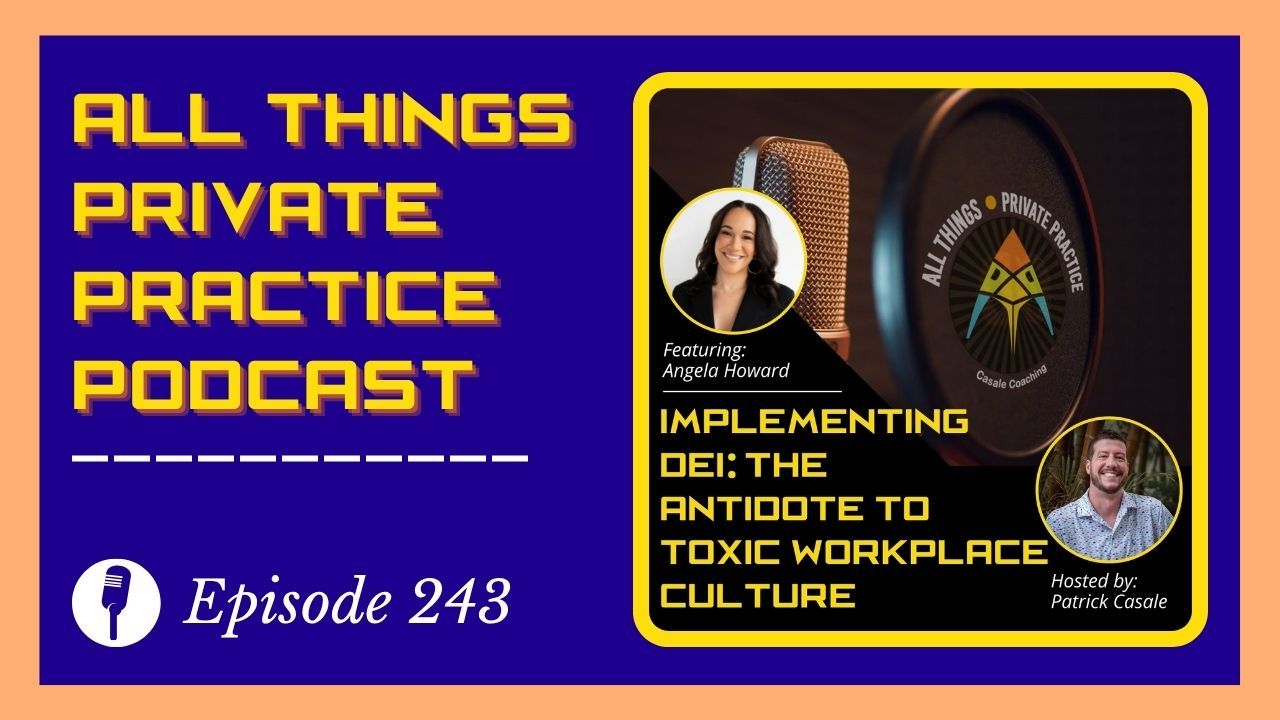
In this episode, Patrick Casale talks with Angela Howard, founder of Call for Culture and former head of People and Culture, about transforming workplace culture and leading substantive organizational change. Angela shares insights on building truly equitable, people-centered organizations and offers a much-needed reality check on performative vs. authentic DEI efforts.
Here are 3 key takeaways:
- True Culture Change Starts at the Top: Diagnose gaps within your organization. Often, leadership habits are the real barrier to progress, not the employees. Addressing leadership resistance is vital for sustainable transformation.
- Beware the Red Flags: Language like “we’re all family here” or “work hard, play hard” can signal toxic workplace dynamics. Evaluate if your organization values partnership over possessiveness and transparency over secrecy.
- Choose Collective Action over Empty Marketing: Conferences and gatherings should prioritize actionable conversations, equitable opportunities, and systemic impact—not just box-ticking or PR. Seek out spaces that foster real change, not just appearances.
More about Angela:
Angela R. Howard is a globally recognized equity-centered organizational culture and change strategist who speaks, writes, and advocates for the transformative power of work in driving social impact.
As the Founder of Call for Culture, a strategic advisory firm and community of practice, Angela helps organizations align, mobilize, and transform into humane, people-centered workplaces that create meaningful and lasting change.
A former executive leader and Head of People and Culture, Angela has firsthand experience navigating organizations through complex culture transformations. She has witnessed how the workplace often lags behind societal and generational shifts, and how unsustainable approaches to change can negatively impact both people and profit. Leveraging her expertise, Angela has guided organizations worldwide to build sustainable, adaptive, and responsive workplace cultures.
Angela holds an MA in Industrial/Organizational Psychology and lives in the Chicagoland area. Her team leads Call for Culture’s annual Culture Impact Lab conference. This event brings together culture changemakers to address challenges at the intersection of social impact and the workplace, fostering a vision for a more equitable, inclusive, and just future of work.
- Website: callforculture.com
- Instagram: @callforculture
🎙️Listen to more episodes of the All Things Private Practice Podcast here
🎙️Spotify
🎙️Apple
🎙️YouTube Music
▶️ YouTube
✈️ Check out available Retreats
🗨️ Join the free Empowered Escape FB Community
🗨️ Join the free All Things Private Practice FB Community
A Thanks to Our Sponsors: The Receptionist for iPad, Alma, & Portland, Maine, Summit 2026!
I want to thank The Receptionist for iPad for sponsoring this episode.
The Receptionist for iPad is a HIPAA-ready digital check-in system that eliminates the need to walk back and forth from your office to the waiting room to see if your next appointment has arrived. Clients or patients can check in for their appointments, and you'll be immediately notified by text, email, or your preferred channel. Break free from interruptions and make the most of your time, because it is valuable. Start a free 14-day trial of the Receptionist for iPad by going to thereceptionist.com/privatepractice. Make sure to start your trial with that link to get your first month free if you decide to sign up.
✨Alma
Thanks to Alma for sponsoring this episode.
Alma empowers you to confidently accept insurance backed by an all-in-one EHR that simplifies scheduling, documentation, and day-to-day practice operations. With a network of engaged providers and free CE courses, Alma makes it easy for you to build the practice of your dreams on your terms. Alma believes that when therapists get the support they need, mental healthcare gets better for everyone. Learn more at helloalma.com/ATPP.
The 2026 Doubt Yourself Do It Anyway Summit is happening for the first time in the United States in beautiful Portland, Maine, on September 1st–3rd, 2026. Portland, Maine, is a beautiful coastal city in the Atlantic Ocean. There's a lot of history there, and it's a very funky, creative, safe, walkable, diverse, and progressive city. You will get 9 NBCC CEs. We have ASWB pending—we'll make an announcement when that's finalized—and have 13 prolific industry leaders. This summit has always been about showing that our skills are applicable in so many different ways, and to motivate you to think bigger, grow in this profession, take more risks, work through self-doubt, and really embrace the doubt-yourself-do-it-anyway mentality. Spots are limited. Reserve your spot here: empoweredescapes.com/portland-maine-summit
Doubt yourself. Do it anyway. See you in Maine.
Free Gifts for Our Listeners
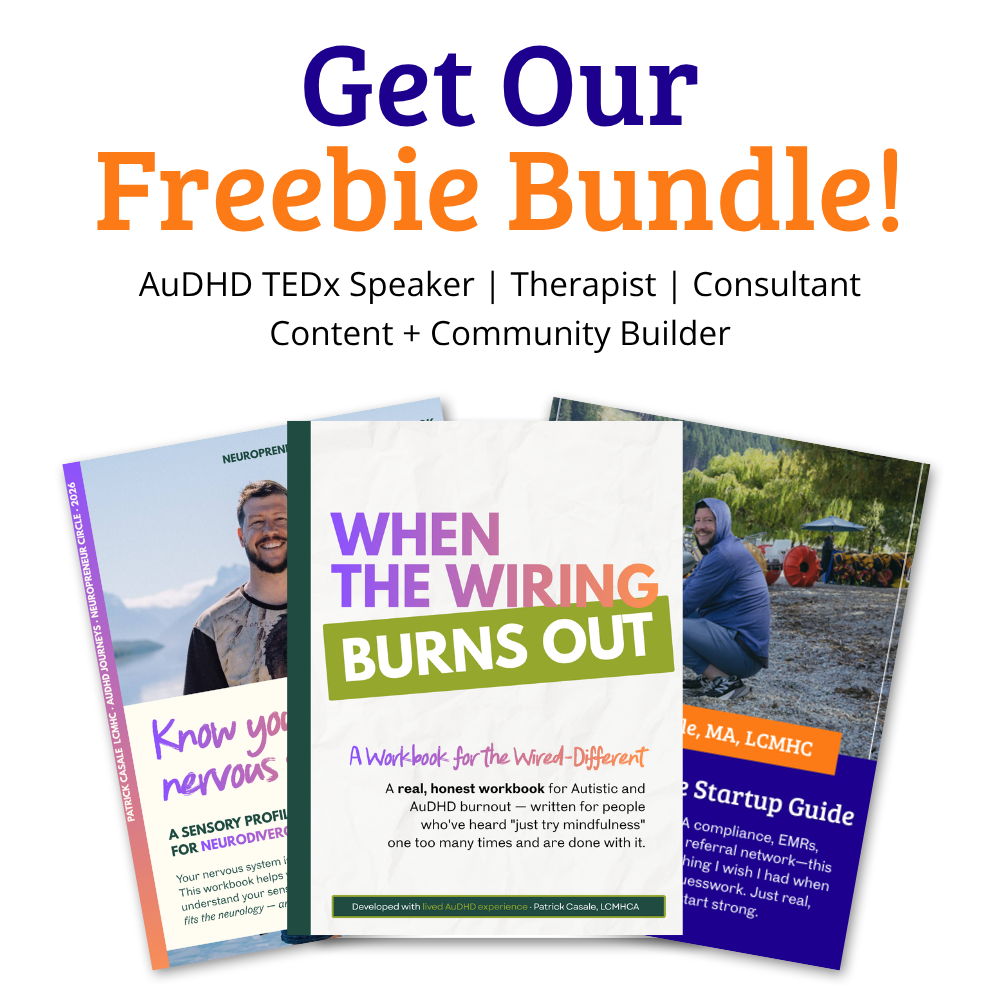
Get a practical podcasting workbook for therapists considering starting a podcast, created by Patrick Casale, host of the podcasts All Things Private Practice and Divergent Conversations.
You'll get a practical structure for therapists who want to start a podcast but don’t want to rush, perform, or build something they can’t sustain.
Grab your free copy: atppod.com/free-podcasting-workbook
✨ Move Beyond Private Practice As A Neurodivergent Entrepreneur
Move Beyond Private Practice As A Neurodivergent Entrepreneur is a FREE 5-part mini-course designed for therapists who want sustainable financial independence beyond one-on-one work.
Access your free mini-course here: atppod.com/move-beyond-private-practice-free
Transcript
PATRICK CASALE: Hey, everyone. Welcome back to the All Things Private Practice podcast. I'm joined today by Angela R. Howard, who is a globally recognized equity-centered organizational culture and change strategist who speaks, writes, and advocates for the transformative power of work and driving social impact.
As the founder of Call for Culture, a strategic advisory firm and community of practice, Angela helps organizations align, mobilize, and transform into humane, people-centered workplaces and create meaningful and lasting change.
A former executive leader and head of people and culture, Angela has a first-hand experience navigating organizations through complex culture transformations. She has witnessed how the workplace often lags behind societal and generational shifts, and how unsustainable approaches to change can negatively impact both people and profit.
Leveraging her expertise, Angela has guided organizations worldwide to build sustainable, adaptive, and responsive workplace cultures.
She has a master's in industrial and organizational psychology and lives in the Chicagoland area. Her team leads Call for Culture's annual Culture Impact conference. This event brings together culture change makers to address challenges at the intersection of social impact in the workplace, fostering a vision for a more equitable, inclusive, and just future of work.
Thanks so much. That's a cool bio. I really like that a lot.
ANGELA HOWARD: Thanks, Patrick. And thanks for having me. Appreciate it.
PATRICK CASALE: Of course. Shout out to Kendra, who might be listening right now for the connection.
ANGELA HOWARD: Hey, girl.
PATRICK CASALE: So, I think you're the first masters in organizational like industrial psychology that we've had on here. And I'm always fascinated by that perspective, because your background is really in, like, looking at how organizations are structured, built, and designed to best support the well-being of the staff. And that’s a really cool perspective to have. So, tell us a little bit more about what you're doing. Like, everything I just read sounds very, very interesting and really unique.
ANGELA HOWARD: Yeah, I know it was a lot of words, but really what it comes down to is behavior at work and systems-level change. So, if you think about how the workplace, you know, any institution really has been built, there are systems of inequity. We've built it really around, quite honestly, the exploitation of labor. When you think about the labor movement, and you know, we've talked a lot about DEI over the last decade or so. These were all movements to say, how do we bring dignity, respect, and inclusivity into the system of work, which wasn't built around that initially?
So, when something is so fundamental and foundational to an organization, it's very hard to change it. So, a lot of my work is going in diagnosing, you know, kind of gaps within the organization. And hint, it's usually leadership, that's the issue, because we are perpetuating the behavior and the habits of the things that are harmful to employees most of the time.
So, you know, my jam is like systems-level change, and that can be done within workplaces, but also other institutions. So, the same kind of approach applies.
PATRICK CASALE: Absolutely. That's really cool. How often are you going into these places of work and meeting resistance from leadership when you start introducing these topics?
ANGELA HOWARD: 90% of the time. I will say-
PATRICK CASALE: [CROSSTALK 00:05:02]-
ANGELA HOWARD: Yeah, it's interesting because, typically, I'm hired by a leader who, one of two things, right? One is, there's something that's causing them pain, that is causing them to say, okay, something's happening with our culture. We don't know what it is. Just because it's painful, it doesn't mean they actually want to change it. So, typically, they're like, “Hey, come in and fix it.” And usually, it's like, fix the people, fix the C-suite, or the executive team. And that's where the resistance comes in.
PATRICK CASALE: For sure. It almost gives me thoughts of like shows like Bar Rescue and things like that [CROSSTALK 00:05:42]-
ANGELA HOWARD: Yes, yes, exactly.
PATRICK CASALE: Restaurants bleeding money. And it's like, well, we need to change these things. And there's always resistance to that, right? Because I think as humans, we are often, sometimes, anchored into resistance to change.
And I think for leadership, it can probably feel like threatening to be like, we're incompetent. We're not doing things well. There's something wrong with us. And there probably is, to some degree, a lot of the time, right? So, having to be able to bridge that gap and have those conversations in a way where that can land, and they can actually implement and incorporate, I think, is huge.
ANGELA HOWARD: Absolutely, yeah. It's a tough process, because, to your point, the process of change actually mirrors the process of grief in that the human emotions are very similar, where there's like denial. And then, you know, you have to go through a period of processing and then acceptance. So, I am also kind of carrying leaders through that process as well. And sometimes we get to the end, and sometimes we don't, sometimes we don't reach it, and we don't change. And as a partner or consultant coming into an organization, there's only so much I can do unless the leaders are willing to change.
PATRICK CASALE: Yeah, absolutely. Yep, I agree. And it sounds so fascinating to say, like someone would hire you to then be like, “Yeah, I'm not really interested.”
ANGELA HOWARD: “Yeah, no. Thanks.”
PATRICK CASALE: Yeah. [CROSSTALK 00:07:05]-
ANGELA HOWARD: And that's interesting because, you know, during, I think, the height of work around DEI, you know, we were doing really, really well, because organizations were put on the spot for this type of work, but a lot of it was performative, so it was more of a PR exercise to say, “We've hired these people, we're paying them lots of money, and they're doing this great work.” Check the box.
So, one thing that my team and I always focus on is we're very transparent with our process, because we take a lot of time in the beginning to talk to the people in the organization, and we always ensure that their voices are included. And what we make clear is that we work for the organization, not for a person.
A lot of consulting firms will, you know, say, “Well, we have these stakeholders, and we have to kind of appease these stakeholders.” We go in and say, “No, we work for the organization in making it better.”
And so, we took a little bit of a different approach, which isn't appreciated by everybody. So, it's been an interesting few years, to say the least.
PATRICK CASALE: Yeah, and I bet that this year has been really interesting with the state of our country and attacks on DEI, in general. And I imagine that makes things even harder in terms of resistance that could potentially show up in some of these organizations, saying, like, “We want to change, but we don't really want it.” We're being told we actually don't have to anymore. Like, we're being told that [INDISCERNIBLE 00:08:35] if we do that.
ANGELA HOWARD: Exactly. Yeah, I guess, we had this huge umbrella of people who were doing DEI work and culture work, and now we're finding a few things. One is not everybody was serious about it. It was more of the check the box PR effort. And now they're like, “Oh, we don't have to do that anymore? Cool. We're going to, you know, divest with that investment.”
Then there's a group of people, you know, like nonprofits, for example, are in a really tough spot, because their actual mission is around DEI most of the time. And so, they're being attacked just to exist. And you know, also being able to pay, like legal fees to fight against people filing claims. They don't have that money. So, there's kind of a reframing of DEI that this group has to do. We have to call it something different. We have to continue to do the work, but, you know, kind of massage language.
And then, there's the people who are just doubling down. And I would put myself in back camp. I mean, thankfully we don't run a, you know, government company or, like, a nonprofit, so we have a little bit more flexibility to still speak up and use our platform around that.
PATRICK CASALE: Right. And I love that, the third point, for sure. And I found myself in that camp as well. I want to go back to your first, like, point, which would have been like, “We don't have to do it anymore? Cool.” And maybe this was lip service or very performative, check the box, etc.
Let's talk about what that means for culture. Because, like, I think if you are an employee in a organization, whether you are in a group practice or any sort of organization, and they say, “You know what, we really don't have these values. These are things that we don't care that much about.” Or, like, “We just create an equal space for everybody.” Like, all lives matter, type of shit. So, like, what does that do to culture?
ANGELA HOWARD: It's extremely damaging. Because, first of all, there's a dissonance between what employees are experiencing and what companies are saying. And I think people are waking up to that fact pretty quickly.
And there is a pushback that we're seeing. And this kind of balance of power, I think, over the last few years has been very erratic, right? So, we had a moment in time with COVID where everyone, you know, was working from home. And for people who are marginalized in the workplace, this was great, because you know, people with disabilities, people of color, you know, the people who have been marginalized and on the margins of the workplace experience were like, “This is great. I don't have to deal with microaggressions. I know the accommodations that I need.”
And then, you know, the power got rebalanced, right? Said, everybody come back to the office. And now, we have to snap back into the status quo.
So, I think we're at a very interesting point right now where I believe, even though we're seeing kind of a swing back because of administration, you know, the lack of focus on human rights and the human experience, I think it's going to pivot. It's going to swing right back. It's just going to take some time.
PATRICK CASALE: Sure.
ANGELA HOWARD: Because there is more of an uprising with the employee base and new generations coming into the workplace, saying we're not dealing with the status quo.
And one of the things I talk a lot about, and it just drives me a little nutty, is, you know, every generation, we had this big conversation about them, right? Gen Z. I'm a millennial, so at some point, we were the hot topic. Now, it's Gen Z, and it's the same conversation, right? Oh my gosh, they don't want to work. They're entitled. They're lazy. We've literally been having this conversation since the 1800s.
PATRICK CASALE: Yep.
ANGELA HOWARD: There's a Reddit thread, if anyone is interested, I'd be happy to share you the link, but it's a list of newspaper clippings since 1894, and they all sound the same. And it's like nobody wants to work. And it's always around a point in time where we're asking for progress, and we're asking for dignity and respect in the work we do.
And so, I know I'm giving you lots of information here, but [CROSSTALK 00:13:05]-
PATRICK CASALE: I love that.
ANGELA HOWARD: …culture. We are at a breaking point of what is acceptable. And even though the old norms are still kind of holding on, I believe we're at a point of a revolution, an evolution that we haven't seen since the labor movement. I think we're going to see a whole nother movement in the next few years.
PATRICK CASALE: I think you're absolutely right. And I actually love these conversations about culture creation, because I always try to, like, step back and take a look at what people are saying externally. And I see a lot of that, right? Like, from other, for example, group practice owners, let's use that as an example for this podcast, of like, nobody wants to work. We never get applications. Anyone that's here, you know, is so lazy and unmotivated. Everyone wants to work 15 to 20 hours a week.
I think that COVID, and I've say this on my other podcast a lot as a autistic ADHD human, was one of the best things that's ever happened to me. And I don't mean in the state of the world globally, but personally, to be, like you said, work from home, create my own accommodations. The recollection and realization of the typical workflow and infrastructure does not work for me. My sensory stuff is too overwhelming. And it was just like eye-opening for me.
And as someone who employs, you know, 25, 30 humans, I try to think about that perspective all of the time, of how can we create culture without taking advantage of people? There's always going to be a power dynamic shift with employer/employee. But how can we be super transparent, accommodate people's needs and necessities as dignified humans, without jumping to conclusions of laziness, unproductive, unprofessional, whatever that narrative is. And there's a reason that our inbox stays full of applications every single month. And there is a reason that other people are really struggling to find “motivated workers who are not lazy.”
ANGELA HOWARD: Absolutely. And I think a lot of the work that I do is around leadership behavior. And to your point, you've created a space where people can do their best work. And I think a main point of leadership is to create an environment, a climate, for that to happen.
And oftentimes, we don't think about leadership that way. We think about leadership as a title, or a place on an org chart, or, you know, delegating work, or telling people what to do, giving them direction. And we need to blow up that definition, that kind of command and control definition of leadership, because it doesn't work for human beings. It works for widgets in an assembly line and project planning. It doesn't work for complex human beings. And that's why having a degree in organizational psychology, when I come into an organization, it's like a whole new world I'm opening up to say, yeah, you need to know about the psychology of humans to lead them.
And actually, being a leader is a huge responsibility, because you have somebody, I consider it a caregiver role. You have somebody within your care. A portion of their lives is in your care for a certain part of the day. And you can send them home really fulfilled and happy. Or you can send them home harmed. You can harm people in the process of leading them. And people don't see the responsibility of that role. And that's a problem. And I think, you know, when we think about all the culture work that we were just talking about, it just compiles on over time, if you have bad leaders.
PATRICK CASALE: For sure. I mean, it certainly trickles down. And it impacts, and influences, it poisons the well, really, so to speak.
ANGELA HOWARD: Yes, exactly.
PATRICK CASALE: And I've been a part of conversations with organizations where it's like, Jesus, this is really toxic, and the only way out is to, like, really deconstruct everything we thought we knew and rearrange all of the leadership infrastructure, and that's where that pushback comes in, right? Like, that's where that resistance comes in because it's like, “Oh, I feel threatened our entire existence could change.”
I always try to look at like the longevity and holistic health of an organization, and what does our retention look like? What does it mean when people are leaving? What reasons are they leaving for? Are they leaving because they feel disrespected, unsafe, unsatisfied, or are they leaving because you've helped develop them into a human, and employee, and maybe someone who wants to go start their own business? I think that's very different. I love Ted Lasso. I don't know if watch [CROSSTALK 00:21:00].
ANGELA HOWARD: Love, love, love, love. Yes, it's a lesson on leadership.
PATRICK CASALE: Yeah. It's one of the best TV Shows of all time, for that reason, I think. And I'm doing a like, 50th re-watch right now. And-
ANGELA HOWARD: [CROSSTALK 00:21:15] for the soul, you know? It's one of those-
PATRICK CASALE: It's one of those shows that you need in your life. I just think, like, is so beautiful. And there's a scene where Keely gets her like job offer to go start her own business. And she's talking to Higgins about the fear of telling Rebecca. And he's like, “Oh, because she's going to feel betrayed.” Or, “Oh, because you know you feel bad about leaving.” She's like, “No, it's because she's my best friend and she gave me this opportunity. I don't want her to feel like I'm ungrateful.”
And he says something like, “Great leaders know you will move on, and better leaders help you move on. And hope that you do.” And I think about that all the time. And how I see so much possessiveness in culture sometimes, of like, these are our employees. And it's like, “No, they're fucking humans.”
ANGELA HOWARD: Yes. And if you look at the language we use at work, I'll name a few things for you, okay? I've heard people talk about poaching when it comes to people. Like, are you going to poach that…? It's kind of disgusting, actually.
You know, we talk about human capital management. We use all these words and this language around possessiveness of people. And you know, this is rooted probably in history that we could talk about on another podcast.
PATRICK CASALE: For sure.
ANGELA HOWARD: But, you know, we really think about people as a means to an end when it comes to the work. And so, I agree with you 100%. There is also a sense of toxic loyalty. Even the idea of loyalty, I think, is something that doesn't belong in the workplace. It is a partnership, right?
I say for a certain period of time, I'm going to give you my talent, my time, my contribution, and you're going to exchange that for an experience, and maybe some benefits, and definitely pay, right? So, it is a partnership, and that agreement, that social contract as well, is the loyalty.
But you know, I have worked with a lot of family-owned businesses, and it's interesting, because it's a family-owned business, but they want all their employees to be family. They're like, “We're all family here.” You know that terminology.
And that's really toxic, because, first of all, families don't work together. They don't fire each other. They don't give each other performance reviews. They don't have tough feedback conversations about their work. It’s an exploitation of the word loyalty, and employers will use it within the workplace to shame and guilt people into doing more for them.
PATRICK CASALE: Yeah, yeah, it's so exploitative and like, it creates this codependent toxicity of like, our employees have rely on us for their, like, it's like they're just doing a job, right? And ultimately, these are humans.
And I can think about being in the reverse, where I was an employee in middle management, which is the worst fucking place to be, and just feeling so dependent on that role, and on that job, and on the administration. And I remember when I finally built up the courage to leave and start my own business, I gave a fucking 90-day notice. Like I was like [CROSSTALK 00:24:30]-
ANGELA HOWARD: [CROSSTALK 00:24:30] generous.
PATRICK CASALE: My clients need me. My staff needs me. You know how fast they replaced me? It was two days, two freaking days. I was like a dead man walking the whole time. So, I remember, like, redacting that notice.
But ultimately, I know what it feels like to feel that almost feeling of like dependency, and you feel really like this weird loyalty to this employer, or organization, or infrastructure who's not treating you well. It feels like an abusive relationship a lot of the time.
ANGELA HOWARD: It does. It does. And you know that is something that is so prevalent. So, anytime you see on a job description, “We're like family here.” Just run, run the other way. Just know that from a workplace culture perspective, it sounds good, but I don't know about you or any of the other listeners, but family can be toxic.
PATRICK CASALE: I'm not trying to work with a single member of my family.
ANGELA HOWARD: Exactly, same.
PATRICK CASALE: [CROSSTALK 00:25:34] relationship, it's like that, where I have to see that person every single day. Yeah, absolutely. So, that's a red flag. That's a good one.
Do you have any other good ones that like come to mind where you're like, if you see this, get the hell out of there. Or if you're experiencing this, get the hell out of there.
ANGELA HOWARD: You know, anything around work hard, play hard, hustle, people weaponize the word grit. I really have a problem with it. There’s science, and there's backing around the idea of grit and motivation.
And Angela Duckworth is a wonderful author. If you want to read her book about grit, do that, but reference it correctly and don't weaponize it. I think a lot of leaders, I see a lot of founders weaponizing this idea of grit, and they kind of translated to we're going to do whatever it takes to get the job done for. Forget systems, forget working smart, forget building process, we're going to grit it out, and that equals long hours, lack of inclusivity when it comes to working styles. So, anything around grit, hustle, or work hard, play hard-
PATRICK CASALE: Get the hell out.
ANGELA HOWARD: Run.
PATRICK CASALE: Run for the hill. Yeah, I like that. The work hard, play hard one is good, for sure. I'm going to think of more when we probably get off the air, because it's so funny to me, because I audit, like, job postings and things for other organizations a lot. And it's laughably bad. And I also, like, you know, we're not going to disclose the pay because we're not feeling that good about what we're paying people or like-
ANGELA HOWARD: Also, illegal, by the way.
PATRICK CASALE: Yeah, exactly what happens all the time where, hey, based on experience, here's maybe a vague range of, like, salary that you might get. It feels so pyramid scheme-esque. It's like mainline marketer-esque, and it also feels so shady. And then, so many staff go into an interview, they don't feel comfortable to talk about the money piece, and they just accept whatever's put in front of them. And in reality, it's like, “Wow. I didn't even know we could have conversations like this in a healthy way.” Because it's such a power dynamic.
ANGELA HOWARD: Yeah. And there's also things internally that, you know, we've always been taught don't ask people their pay. I would highly recommend you ask people, your friends, your colleagues, what they get paid, because that's how you discover where inequities are happening. So, we've created these rules, these norms that are just slowly being broken down, which I love, and it's way overdue.
PATRICK CASALE: Yeah, yeah, way overdue. And I think you're right, we'll see that pendulum swing, probably going to see a lot of stuff come crumbling down in the next five to 10 years. It's long overdue. And it feels like it's just like bubbling beneath the surface right now.
I've been watching all these like dystopian end-of-the-world shows and movies, and I’m like, “Could I survive it?” I don't think I could. I don't think I have any skills that are valuable enough to survive it. But like it makes me feel like we are on this verge of this precipice, of like things are never going to be the same.
ANGELA HOWARD: Yeah, I agree with you. I mean, a show that's kind of aligned to that, and from a workplace perspective, I don't know if you’ve watched Severance.
PATRICK CASALE: I couldn't get into it, but I-
ANGELA HOWARD: I know. It's kind of a slow burn. It's kind of a slow burn. You got to hang in there. But it's interesting, because workplace culture has been a centerpiece of broader culture over the last, like, five to 10 years. You know, we had, like, Office Space, and The Office, we had Severance. We have, like, all these shows that are in the context of being in a workplace. The Paper just came out. So, there's this kind of omnipresent, like, that's when, you know, I think you're on the verge of some kind of change, is when pop culture is starting to reference like the dystopian nature of what work is.
PATRICK CASALE: 100%.
ANGELA HOWARD: And yeah, Severance is a tough one to get through, but if you have a chance to watch it and you have the patience, it's pretty interesting, pretty interesting.
PATRICK CASALE: Do you know I can’t get behind, what's the main actor's name? Adam McKay?
ANGELA HOWARD: Oh, yeah.
PATRICK CASALE: Maybe that's [INDISCERNIBLE 00:29:46]. I don't like him. So, it's really [CROSSTALK 00:29:49]-
ANGELA HOWARD: Yeah, I get it. He’s not likable.
PATRICK CASALE: …as the main character, and it's just like, it was just very confusing. So, I default more to, like, workplace culture. Let's think about like the Ted Lasso world.
ANGELA HOWARD: Yes.
PATRICK CASALE: And like Abbott Elementaries of the world. And I'm like, I can get behind that way more.
ANGELA HOWARD: I love that. I love that.
PATRICK CASALE: Okay, so I really enjoy this conversation. I could have this all day-
ANGELA HOWARD: Oh, we'll do a part two.
PATRICK CASALE: I'm happy to do it. So, I guess let's talk briefly about the conference or the big event that you host every year. And maybe I'm getting that wrong, but like, tell us a little bit about what that is and how that came to be, if you don't mind.
ANGELA HOWARD: Yeah, yeah. So, I have been in the conference circuit for about 10, 15, years as a speaker. Patrick, you probably can relate to this, but I found myself in spaces where we weren't having the right conversations that led to action. I have found that conferences tend to be more of a marketing machine than an actual place of gathering and collective action with the brain trust of people that you've brought together.
The other piece is, I saw a lot of inequities when it came to the conference circuit. Speakers not getting paid. Some speakers getting paid more than others. No social responsibility around the event, and like, are we hiring? Can we pour our money into vendors who are small businesses for the community in which we're hosting the event?
So, all of that to say, I kind of got fed up around it. And I said, you know, I'm going to build my own responsible model around conferences, which is still in the process. I haven't perfected it yet, but more of a model that creates opportunity, equity, and a human experience that actually leads to collective action.
So, the Culture Impact Lab, it's our annual conference. We talk about topics at the intersection of workplace culture, and social change, and impact. So, like some conferences, like DEI or social change might be like one section. It's all we talk about.
So, we are typically gathering people in spaces where we're focused on, like human rights and what that looks like within workplace culture, but also, more socially. So, I call it the big C and the little C, because anything happening within workplaces mirrors what happens socially within broader culture.
And workplaces are usually at the tail end of any kind of change. So, we're really trying to bring people together to expedite that.
And so, we run it every May in Chicago. We're hoping to do more cities soon. This is only our third year. And yeah, if you're interested in joining or learning more, you can find us at callforculture.com, so you can learn more about Call for Culture, or the company, or the conference with that website.
PATRICK CASALE: Love that. We'll have that in the show notes for everyone, too, because that's definitely an amazing opportunity to go, and learn, and participate, and be around people who get it and who are trying to do things differently. I think that's the big piece here, is like, not everybody out there is doing it this way, right? Like, so there are people who are really trying leadership groups that are really good and really trying to figure out ways to better serve their staff and their communities. So, I really love that and appreciate you sharing that as well. So, anything else you want to leave listeners with that we'll link in the show notes as well.
ANGELA HOWARD: No, I mean, callforculture.com is the main one. I'm also on socials. So, @angelarosehoward on Instagram and @callforculture. So, please consider me a resource. Reach out if you're kind of on your own leadership journey, trying to figure, you know, starting your own practice, and you're starting to think about culture, which you really should be thinking about at the very beginning. So, happy to be a resource and just very, very excited to continue these conversations and to be in your orbit, Patrick, so thank you.
PATRICK CASALE: Likewise. Again, Kendra, shout out. So, thank you.
ANGELA HOWARD: Yes.
PATRICK CASALE: Well, thanks to everyone listening to the All Things Private Practice podcast. All episodes are out on Saturdays on all major platforms and YouTube. Like, download, subscribe, share. Make sure to join us in Portland, Maine, for my third annual Doubt Yourself, Do it Anyway summit, September 1st to the third. Doubt yourself, do it anyway. We’ll see you next week.
FREE PRIVATE PRACTICE GUIDE
Join the weekly newsletter for private practice tips, podcast updates, special offers, & your free private practice startup guide!
We will not spam you or share your information. You can unsubscribe at any time.






![Episode 247: Therapy for Religious Trauma and Spiritual Abuse [featuring Michelle Moseley]](https://kajabi-storefronts-production.kajabi-cdn.com/kajabi-storefronts-production/file-uploads/sites/2147507511/images/2fcde71-1a24-73ef-244-52bcff6212f_ALL_THINGS_PRIVATE_PRACTICE_PODCAST_Episode_247.jpg)
![Episode 246: Neuroinclusive Workspaces That Truly Support All Neurotypes [featuring Pasha Marlowe]](https://kajabi-storefronts-production.kajabi-cdn.com/kajabi-storefronts-production/file-uploads/sites/2147507511/images/334bf3d-e7c-8667-e815-e640c1babe_ALL_THINGS_PRIVATE_PRACTICE_PODCAST_Episode_246.jpg)
![Episode 245: Merge Passion and Therapy: Working with Athletes, Brands, and Creatives [featuring Liz Ridgway]](https://kajabi-storefronts-production.kajabi-cdn.com/kajabi-storefronts-production/file-uploads/sites/2147507511/images/07ccf7-cd3f-6b82-d6f3-f10ba5cfd10_ALL_THINGS_PRIVATE_PRACTICE_PODCAST_Episode_245.jpg)
![Episode 244: Marketing: For Therapists Who Hate Marketing [featuring Carrie Wiita]](https://kajabi-storefronts-production.kajabi-cdn.com/kajabi-storefronts-production/file-uploads/sites/2147507511/images/068ba14-13c7-236e-e53b-bd3735f5ac73_ALL_THINGS_PRIVATE_PRACTICE_PODCAST_Episode_244.jpg)